Kuwait's private healthcare sector is growing fast, yet very little public data shows where private care is offered, which providers patients prefer and where the gaps are. To help close that gap, PMB partnered with Tebaba, an online doctors directory in Kuwait that helps patients compare specialists through verified patient reviews. Together, the study combines a directory of 1,227 private doctors, patient search activity, AI symptom searches and verified patient surveys into one picture of the market.
Download the full report (32 pages): English PDF | Arabic PDF
Key Findings:
- 56% of private specialists practise in Hawalli, a governorate home to about a fifth of residents.
- Ahmadi, Farwaniya and Jahra have no private neurologist, and endocrinologists make up only 2% of private specialists.
- Al Salam and Dar Al Shifa together hold about a quarter of the Patient Preference Share.
- Pediatrics accounts for 38% of AI symptom searches but only 12% of private specialists.
- 4 in 10 AI searches happen between 8 pm and 2 am, and 84% are written in Arabic.
- Explaining the condition and the treatment plan has the strongest link to a patient recommending a doctor.
Market Overview:
Kuwait's healthcare market was valued at about USD 6.7 billion in 2025 and is expected to grow by around 9% a year. The state still funds most care, but the private sector accounts for an estimated 15 to 20% of healthcare spending and continues to expand as residents seek shorter waits and more choice.
Kuwait has more than 5 million residents, about 70% of them expatriates. The KD 100 yearly health fee paid by expatriates covers public facilities only, so families who want a specific doctor or a shorter wait pay privately or through insurance. About 1,665 doctors work in the private sector, against more than 12,000 in the Ministry of Health.
Where Private Specialists Practise:
Private specialist care is concentrated along the coast from Kuwait City to Salmiya. Farwaniya and Ahmadi are home to almost half of Kuwait's residents, yet together they host only 14% of the private specialists in this study.
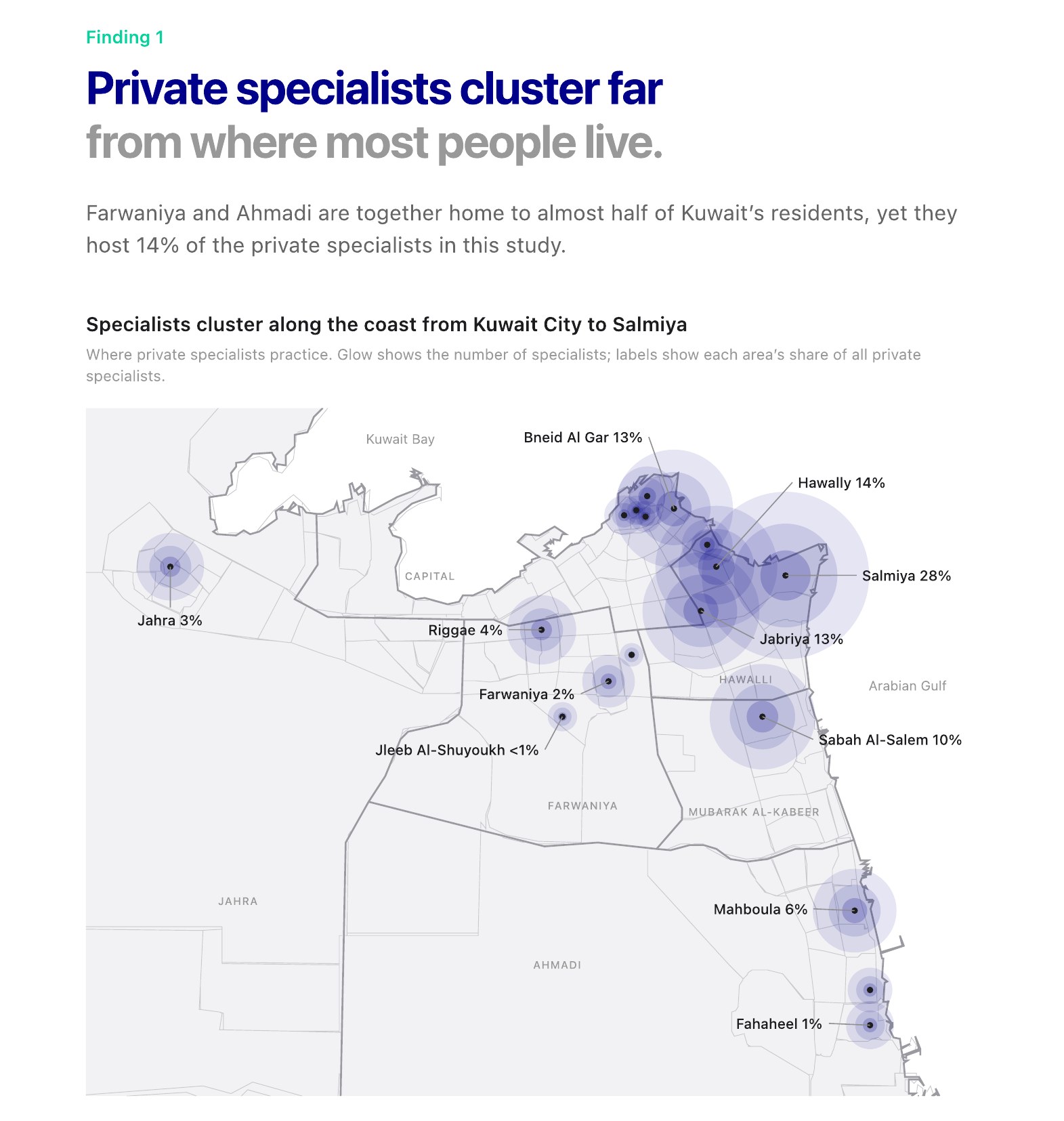
Salmiya alone, home to about 7% of residents, hosts 28% of all private specialists in the directory.
Specialties Missing from Whole Governorates:
The most common specialties, such as gynecology, pediatrics, internal medicine and general surgery, are present in every governorate. Less common ones are not. There is no private neurologist in Ahmadi, Farwaniya or Jahra, and every private specialist in Jahra works from a single hospital.
For patients outside Hawalli and the Capital, this often means a long drive for a specialist visit, or a return to the public system.
Who Leads Private Specialist Care:
There is no public data on private hospital revenues or patient volumes in Kuwait. As a proxy, this study measures each provider's Patient Preference Share, which combines its specialist capacity with the patient demand it attracts.
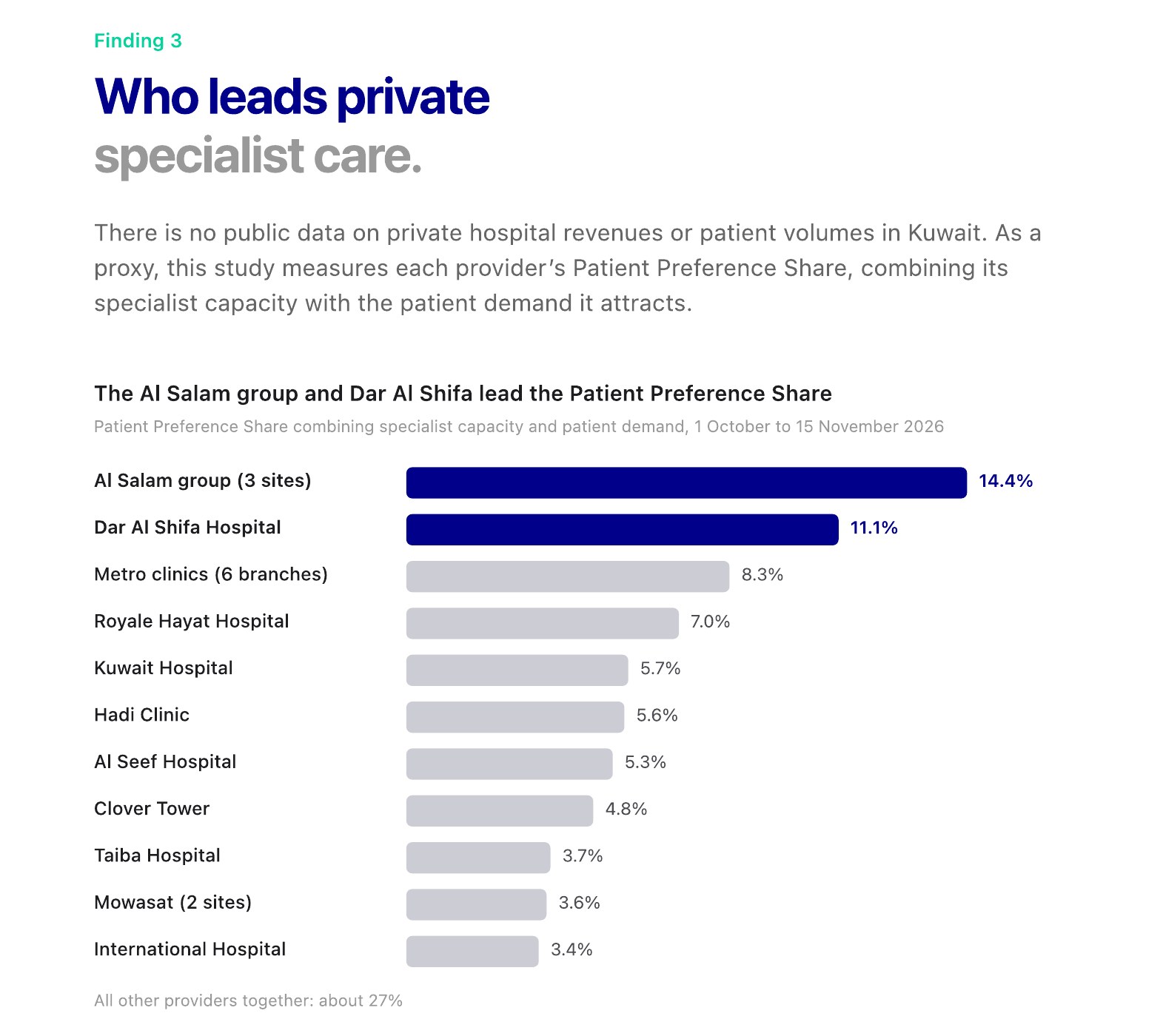
The Al Salam group (14.4%) and Dar Al Shifa Hospital (11.1%) lead, followed by Metro clinics (8.3%), Royale Hayat Hospital (7.0%) and Kuwait Hospital (5.7%). Clinic networks compete closely with hospitals, and all other providers together account for about 27%.
Hospital Bed Capacity:
Public general hospitals are spread fairly evenly, with one for each health region. Private beds are not.
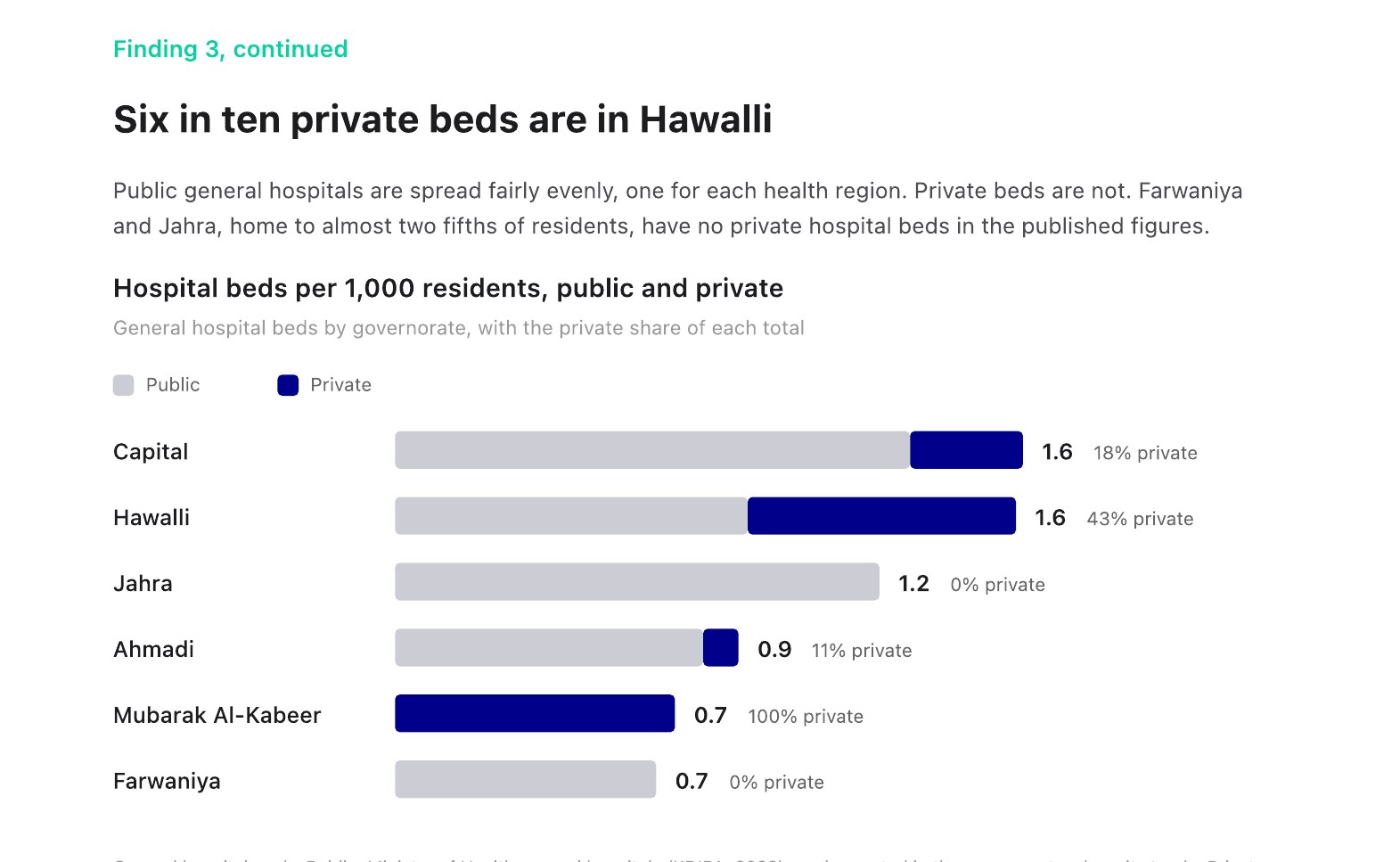
- 6 in 10 private hospital beds are in Hawalli.
- Farwaniya and Jahra have no private hospital beds in the published figures.
- Private and oil sector hospitals hold about 1 in 5 of Kuwait's hospital beds.
- Among public hospitals, Al-Adan had the highest occupancy (72%) and Jaber Al-Ahmad the lowest (16%), based on 2022 data.
What Patients Look For:
Demand for private specialists rose by more than two and a half times over six weeks. Neurology drew about 2.5 times the average demand per specialist, followed by endocrinology and gastroenterology, the same specialties that are hardest to find outside Hawalli.
Families also use AI to describe symptoms before choosing a specialty. Pediatrics accounts for 38% of AI searches, more than three times its share of private specialists.
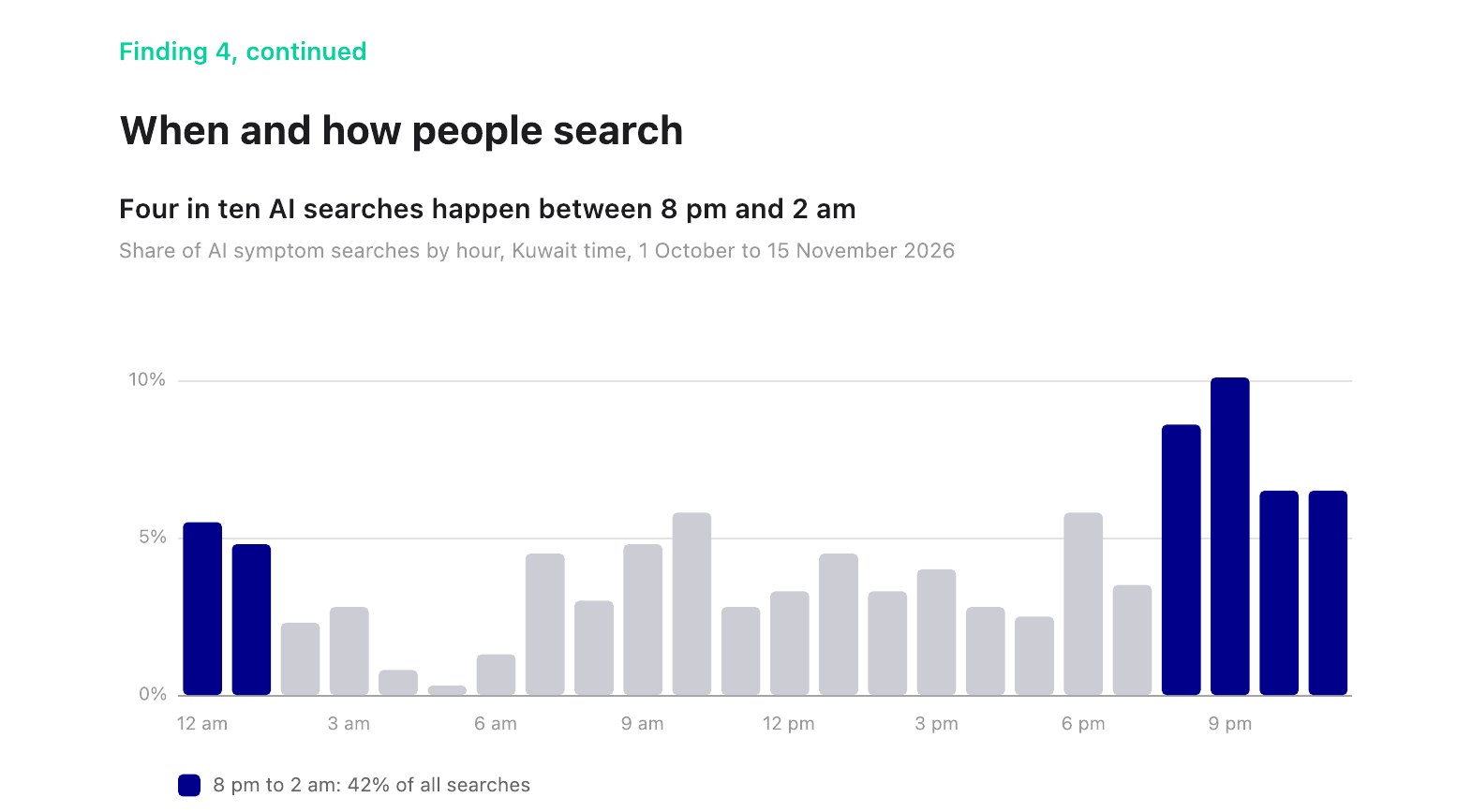
4 in 10 AI searches happen between 8 pm and 2 am, when most clinics are closed, and 84% are written in Arabic.
Patient demand peaks between 12 pm and 6 pm and on Sundays, while Friday is the quietest day. About 1 in 10 patients who looked up a doctor went on to contact the clinic.
What Makes Patients Trust a Doctor:
Most online ratings of doctors in Kuwait are open star ratings and comments. To measure trust more fairly, the study uses Tebaba's Patient Trust Index (PTI), built from verified patient surveys that are checked before they count.
- 66% of patients would strongly recommend their doctor.
- 10% would not recommend their doctor.
- 1 in 7 submissions were rejected by quality checks.
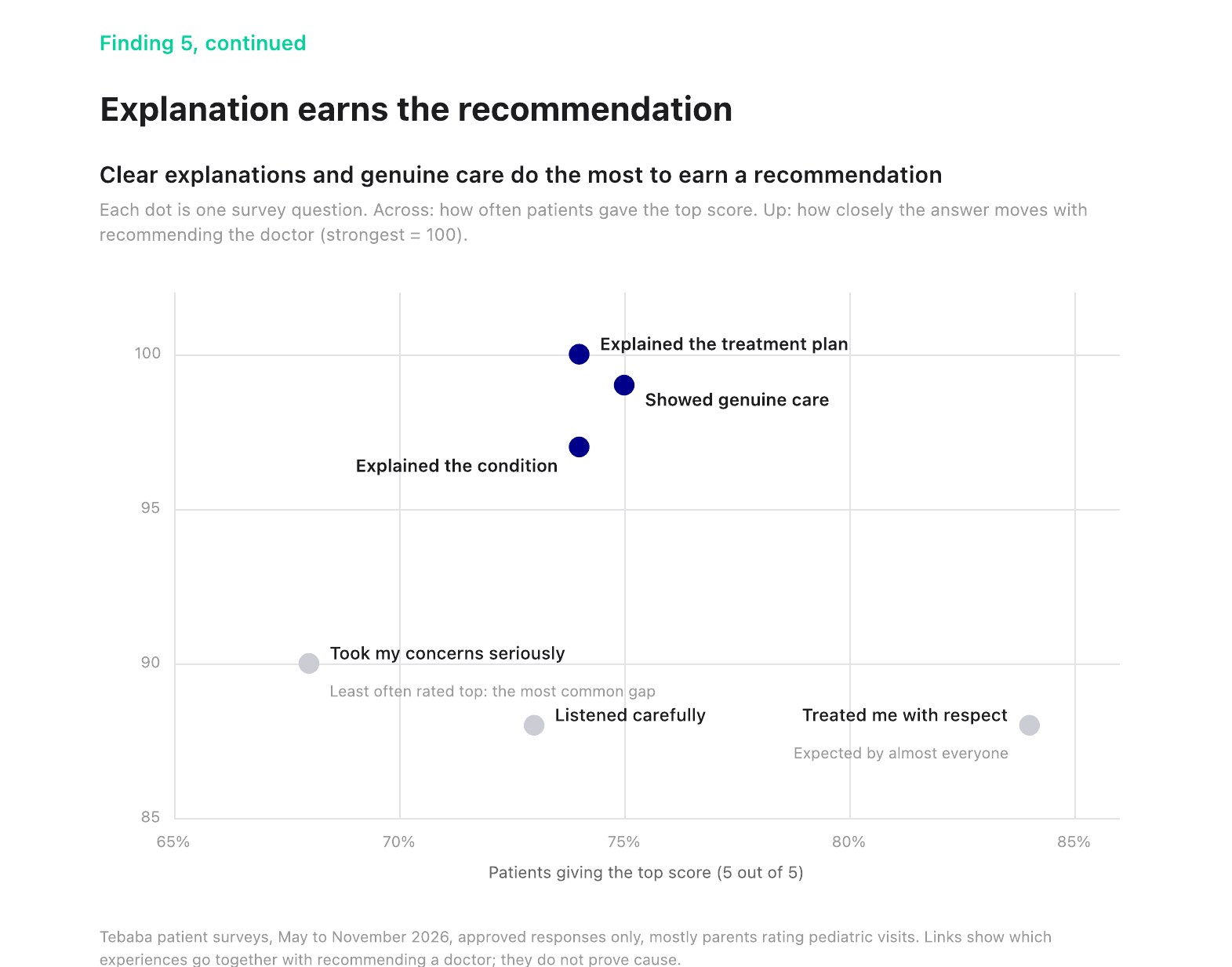
Explaining the condition and the treatment plan, and showing genuine care, have the strongest link to a patient recommending a doctor.
Key Market Insights for Business Owners:
For Doctors and Clinics
Patients compare doctors online before they call. A complete profile, clear explanations during the visit and being reachable in the evening, in Arabic, all shape whether a patient books and whether they recommend you afterwards.
For Investors and Operators
The white space is geographic. Farwaniya, Ahmadi and Jahra hold a large share of residents but few private specialists and, in two cases, no private hospital beds. Specialties such as neurology, endocrinology and pediatrics show demand well above current supply.
For Healthcare Marketers
Demand moves at night and in Arabic. Campaigns, booking flows and call centres that follow those hours, and content written Arabic first, will meet patients where they already are.
Conclusion:
Private care in Kuwait is concentrated in a few areas and a few providers, while patient demand is spreading across specialties and governorates. Providers that close the geographic and specialty gaps, and that earn trust through clear communication, are best placed to grow.
The full report covers all eight findings, bed capacity by hospital and governorate, the methodology and sources. Download it in English or Arabic.
Important notice: this report is for general information only. Figures are estimates drawn from the sources listed in the report and need further investigation before any decision is made. PMB and Tebaba shall not be held responsible for any decision taken by any party based on this report.
Contact PMB, a leading marketing agency in Kuwait, for expert market research and marketing support in the healthcare sector.